
All Resources
Early Identification and Monitoring of Presymptomatic Autoimmune T1D
Early identification of presymptomatic T1D and subsequent monitoring and education has a range
of potential benefits
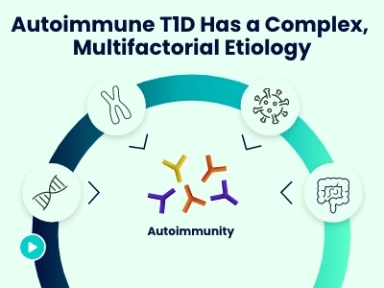
Exploring the etiology of autoimmune type 1 diabetes (T1D)
T1D is a chronic, autoimmune disease with a complex, multifactorial etiology. Explore how genetics and environmental factors can trigger autoimmunity
-(1).png/jcr:content/400x300_Early%20Detection%20of%20T1D%20RW%20Learnings%20From%20T1D%20Screening%20Programs%20Around%20the%20World%20(Expert%20Interview)%20(1).png)
Early Detection of T1D: Real-world Learnings from T1D Screening Programs Around the World
Expert interviews discussing the learnings from and strategies implemented during a real world T1D screening program
-(1).png0/jcr:content/400x300_Early%20Detection%20of%20T1D%20Considerations%20around%20screening%20children%20(Expert%20Interview)%20(1).png)
Early Detection of T1D: Key Considerations When Screening Children for T1D
Expert interview discussing the benefits of T1D screening and communication strategies employed when highlighting the importance of T1D screening

Early Identification: Diagnostic Challenges in T1D
Expert interviews discussing early identification of T1D including diagnosis and misdiagnoses
-(1).png/jcr:content/400x300_Early%20Detection%20of%20T1D%20Fundamentals%20of%20Implementing%20a%20T1D%20Screening%20Program%20(Expert%20Interview)%20(1).png)
Early Detection of T1D: Fundamentals of Implementing a T1D Screening Program
Expert interviews discussing the fundamentals of T1D screening programs
.png/jcr:content/400x300_Monitoring%20How%20to%20Provide%20Psychosocial%20Support%20to%20Individuals%20With%20IAb-Positive%20Status%20(1).png)
Monitoring: How to Provide Psychosocial Support to Individuals With IAb-positive Status
Expert interviews discussing psychosocial support for individuals at risk of T1D

ATTD 2025 Symposium Summary
At the BR1DGE symposium at ATTD 2025, leading experts discussed how innovation can evolve the early detection and management of T1D (type 1 diabetes).
This article is intended to be a summary only. Additional topics were covered in the live symposium in line with the applicable regulations but are not included on the BR1DGE platform.

Autoimmune T1D Imposes a Psychosocial Burden on Affected Children and Their Carers
Early identification of presymptomatic autoimmune T1D may reduce the psychological burden experienced at diagnosis by giving time for preparation and education

Autoantibody Screening Can Detect Presymptomatic Autoimmune T1D in Children
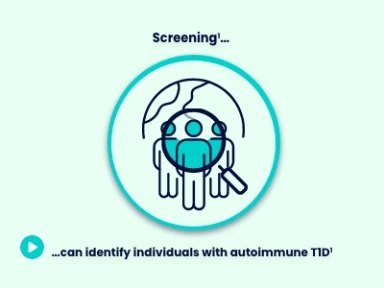
Using a sample pediatric case study (Rosa), this video describes how autoantibody screening can enable early detection of presymptomatic T1D, providing a window of opportunity to prepare for clinical diagnosis

Potential Implications for Children Diagnosed at Clinical Onset of T1D Stage 3
Rosa is an 8-year-old child with presymptomatic autoimmune T1D, but neither she nor her family know this yet. Without prior knowledge, she may be at increased risk of DKA at clinical onset of T1D

Guidance for Monitoring
People positive for at least one islet autoantibody should be monitored regularly