
- Resource
- BR1DGE
- Early Detection
- Staging
- Infographic
Think T1D in Adults Misclassified with T2D
Learn why T1D is often misclassified as T2D and how to differentiate the two in adults suspected of T1D .
Learning Objectives
- Recognize the high rate of T1D misclassification in adults, understanding misclassification can lead to prolonged periods of inappropriate management and care
- Identify clinical red flags that suggest T1D over T2D, such as unexpectedly deteriorating HbA1c despite treatment, rapid progression to insulin dependency, unexplained weight loss, or co-existing autoimmune diseases
- Utilize appropriate diagnostic tools, combining clinical suspicion frameworks (like the AABBCC tool) with definitive islet autoantibody (IAb) to ensure correct diabetes classification
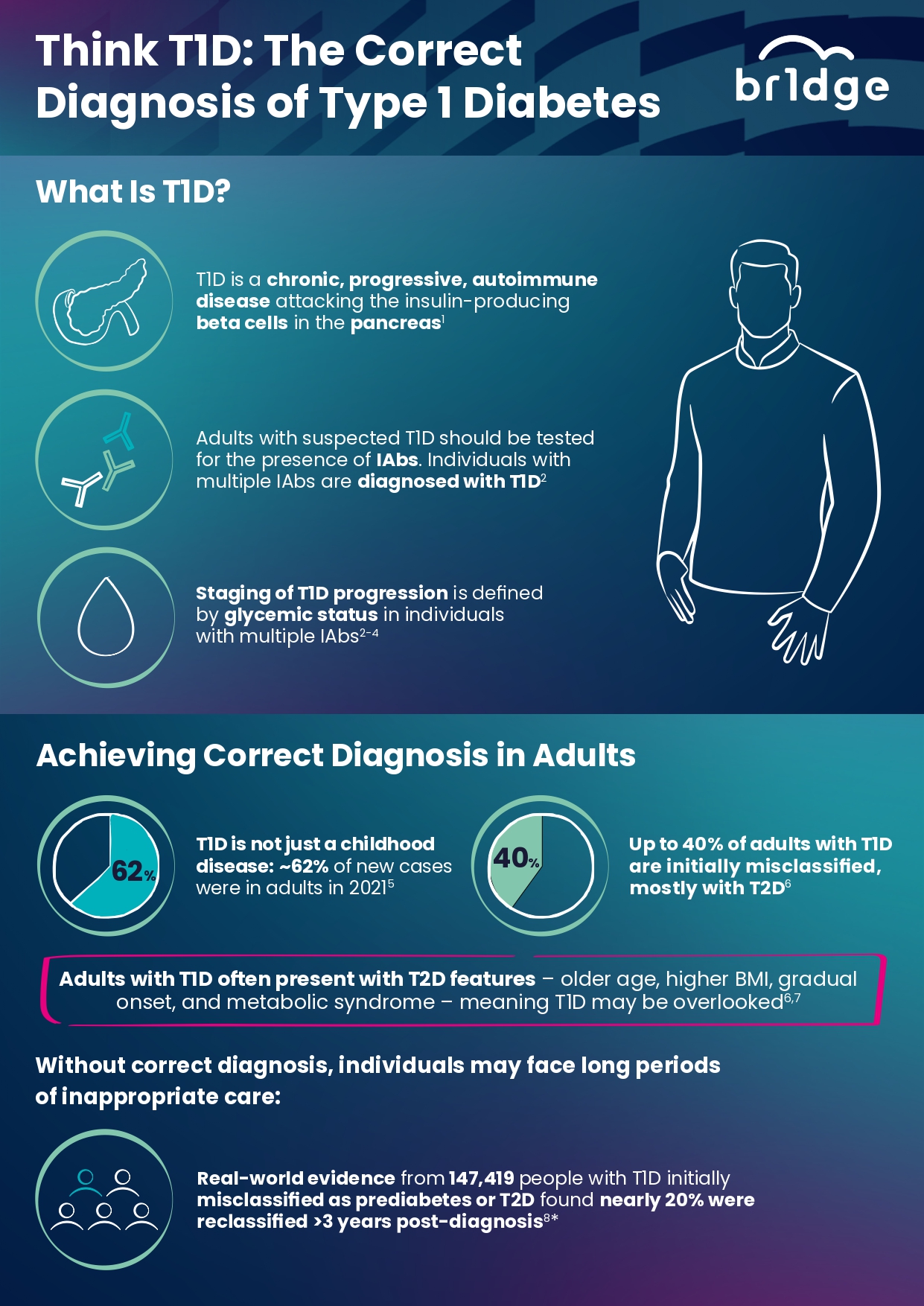
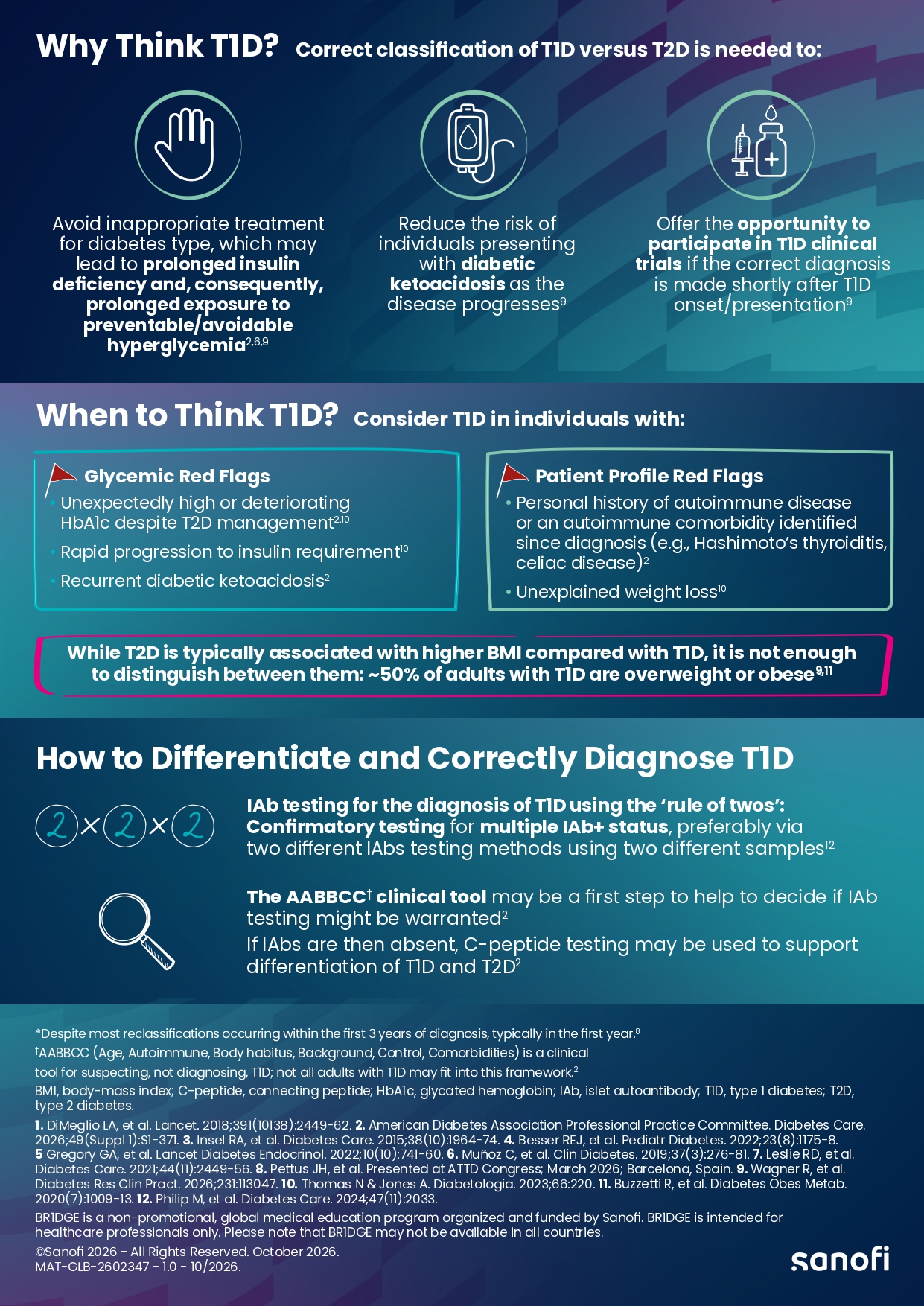

Summary
Type 1 Diabetes (T1D) is a chronic, progressive autoimmune disease, yet up to 40% of adults with T1D are initially misclassified, mostly with T2D. This misclassification occurs because adults with T1D often present with "T2D features," such as older age, higher BMI (with ~50% being overweight or obese), and gradual onset. Correct classification is vital to avoid incorrect treatment, prevent prolonged insulin deficiency, reduce the risk of diabetic ketoacidosis, and offer treatments that delay progression. Primary care physicians should suspect T1D over T2D in patients showing unexpectedly deteriorating HbA1c, rapid progression to insulin, or unexplained weight loss. Suspicion can be guided by the AABBCC clinical tool and must be confirmed using islet autoantibody (IAb) testing.
MAT-GLB-2602347 - 0.1 - 10/2026.

Screening for T1D in Adults with Dysglycemia
Learn why dysglycemic adults are a priority population for T1D screening.

The Future of Early T1D Detection: Integrating the Wider Care Team
Expert discussion of how diabetes teams can adapt to deliver monitoring, education, and psychosocial support for early-stage T1D care.
Early Detection Pathways in Primary Pediatric Care
Expert insights on how primary pediatric care pathways can help scale early T1D detection, from screening and staging to referral and monitoring.