
- Resource
- BR1DGE
- Early Detection
- Staging
- Infographic
Screening for T1D in Adults with Dysglycemia
Learn why dysglycemic adults are a priority population for T1D screening.
Learning Objectives
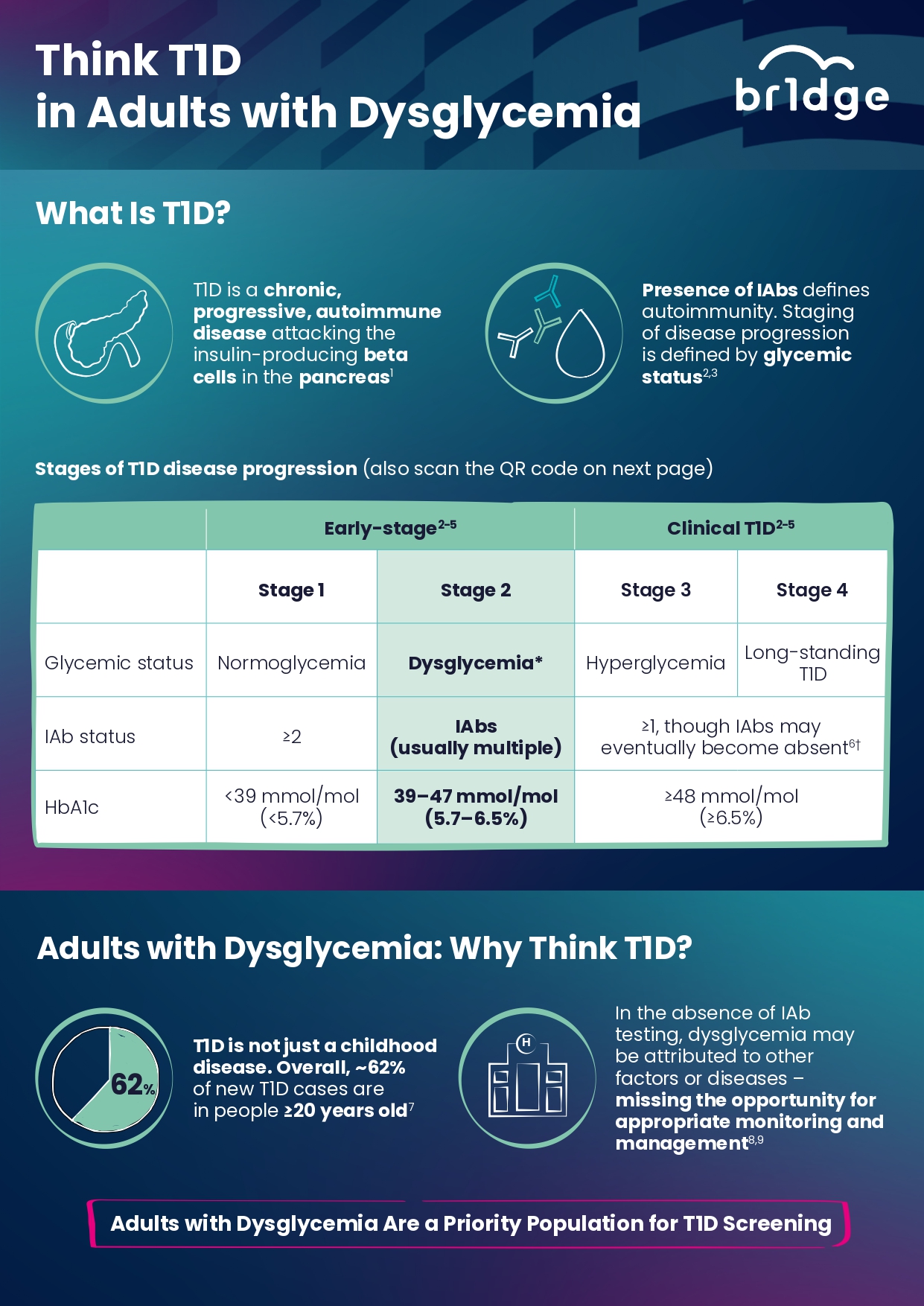
- Recognize that dysglycemia in individuals with T1D may be mistakenly attributed to other factors before testing for T1D, missing opportunities for appropriate monitoring and treatment
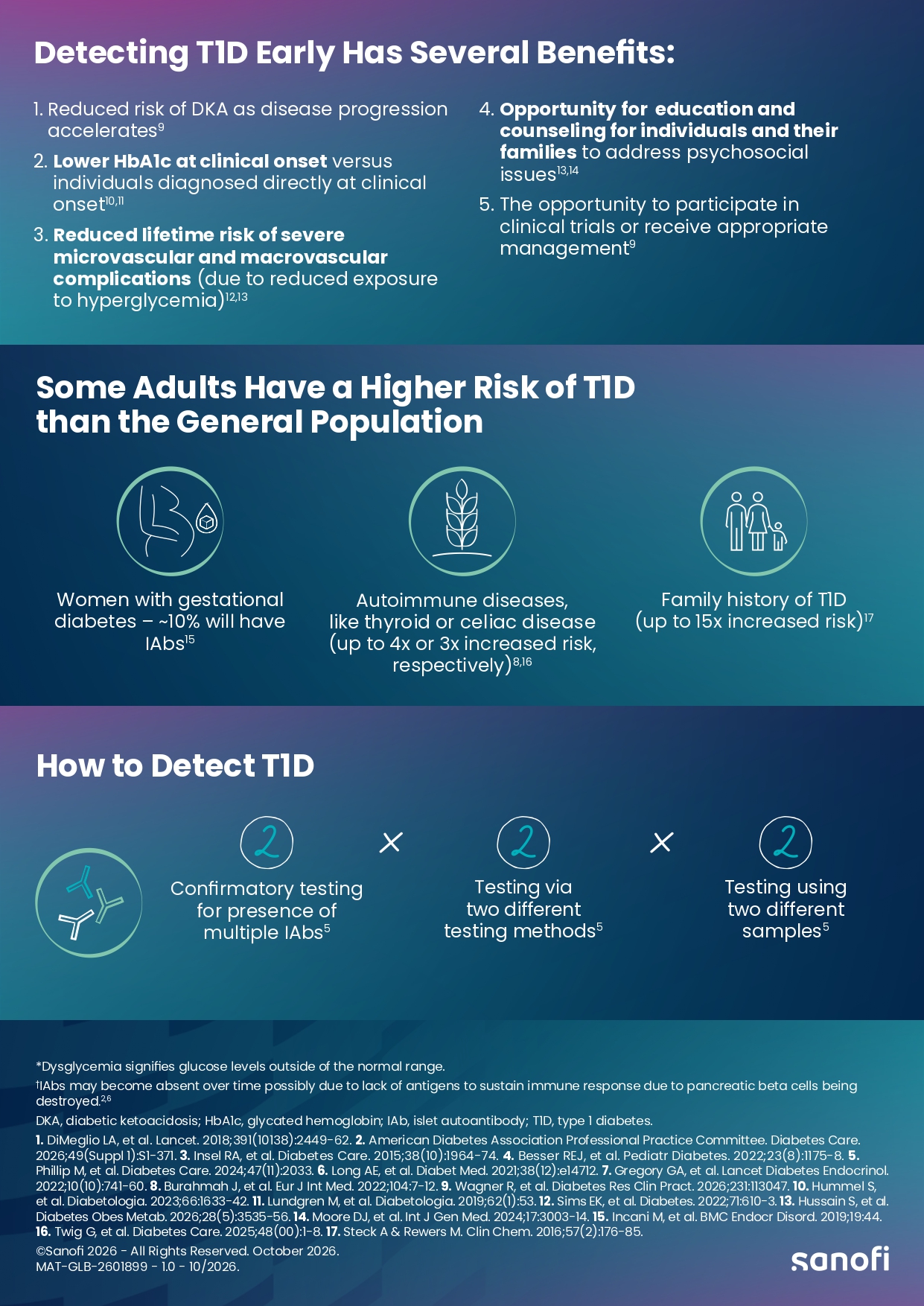
- Note that some adults have a higher risk of T1D than the general population
- Note that repeated IAb testing to diagnose T1D should be carried out if T1D is suspected in dysglycemic individuals

Summary
Type 1 Diabetes (T1D) is a chronic, progressive autoimmune disease, ~62% of new diagnoses occur in adults. In adult primary care, dysglycemia is often attributed to other factors, representing a critical missed opportunity for T1D screening, monitoring, and early intervention. Screening dysglycemic adults for T1D is vital to correct diagnosis. Detecting T1D early (Stages 1–2) significantly reduces the risk of diabetic ketoacidosis, lowers HbA1c at clinical onset, and opens opportunities for clinical trials to delay progression. Primary care physicians can capture these missed opportunities by screening high-risk dysglycemic adults for islet autoantibodies (IAbs).
MAT-GLB-2601899 - 0.1 - 10/2026.

Think T1D in Adults Misclassified with T2D
Learn why T1D is often misclassified as T2D and how to differentiate the two in adults suspected of T1D .

The Future of Early T1D Detection: Integrating the Wider Care Team
Expert discussion of how diabetes teams can adapt to deliver monitoring, education, and psychosocial support for early-stage T1D care.
Early Detection Pathways in Primary Pediatric Care
Expert insights on how primary pediatric care pathways can help scale early T1D detection, from screening and staging to referral and monitoring.