
- Resource
- BR1DGE
- Management
- Pathophysiology
- Infographic
The Importance of C-peptide in Autoimmune T1D
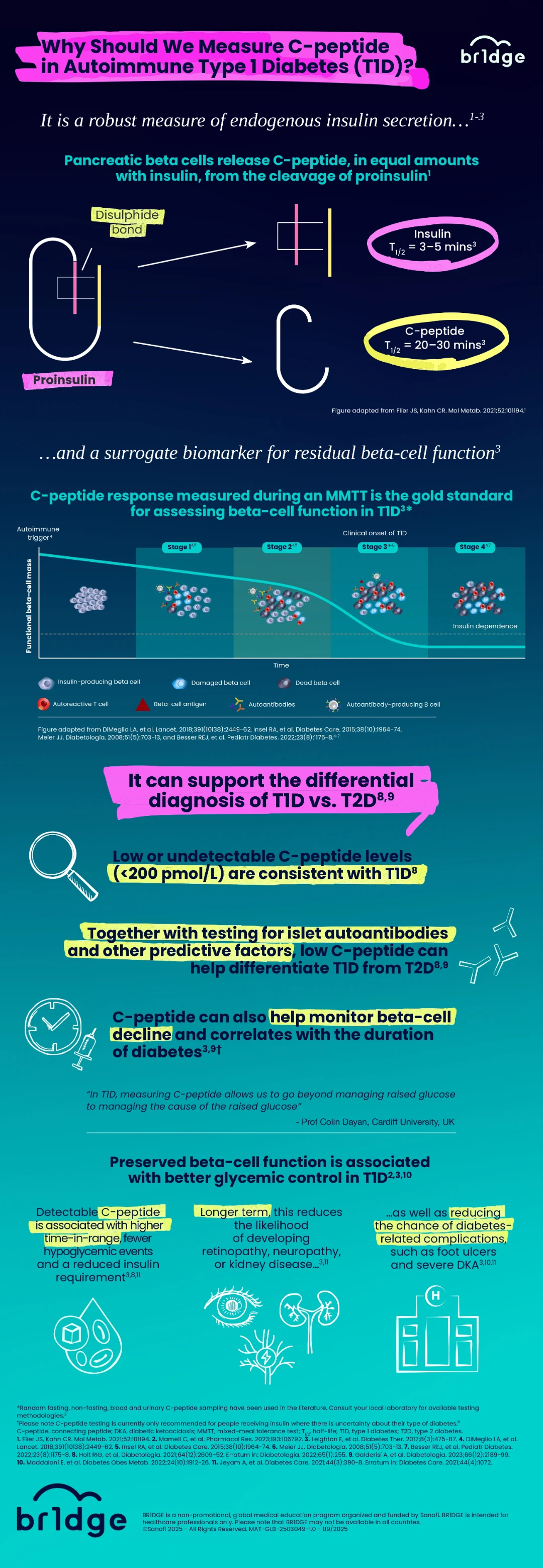
An infographic summarising C-peptide, a key biomarker of beta-cell function.
Learning Objectives
- Understand that C-peptide is a byproduct of insulin synthesis
- Recognize C-peptide's role in understanding disease status in T1D
- Appreciate C-peptide's potential as a diagnostic and prognostic tool
Summary
C-peptide is a key tool in autoimmune type 1 diabetes (T1D) management. It aids diagnosis, disease monitoring, and is a key biomarker for beta-cell function and endogenous insulin secretion. C-peptide measurement during a mixed-meal tolerance test is the gold standard for assessing beta-cell function. Residual C-peptide predicts positive outcomes, fewer diabetes-related complications, and improved glycemic control, meaning C-peptide can potentially guide early interventions to delay or prevent the clinical onset of T1D.
.2024-08-20-15-52-07.svg)
MAT-GLB-2503049 - 1.0 - 09/2025

Advancing Models of Care for People with Type 1 Diabetes
Leading T1D experts discuss supportive care pathways, psychosocial support, and new models of care for people at risk of, or diagnosed with, type 1 diabetes.

Immune dysregulation in T1D: biomarkers and therapeutic targets
Profs. Kay and Bonifacio discuss the role of T-cell dysregulation as a central pathophysiological mechanism in T1D, and its implications for emerging therapies and biomarkers

Early Detection of Type 1 Diabetes in Adults
Learn why early detection of T1D in adults matters, why T1D is often missed in dysglycemic adults, its misclassification as T2D, and how islet autoantibody testing supports accurate diagnosis, staging, and timely management.