
- Resource
- BR1DGE
- Pathophysiology
- Animation
The Autoimmune Pathophysiology of Early-Stage T1D
Explore the complex autoimmune cascade that leads to beta cell destruction and development of type 1 diabetes.
Learning Objectives
- Explore the autoimmune mechanisms underlying the progression from early-stage T1D to insulin-dependent disease
- Understand the role of autoreactive T cells in the loss of beta-cell function
- Recognize islet autoantibodies as biomarkers that the autoimmune process has started
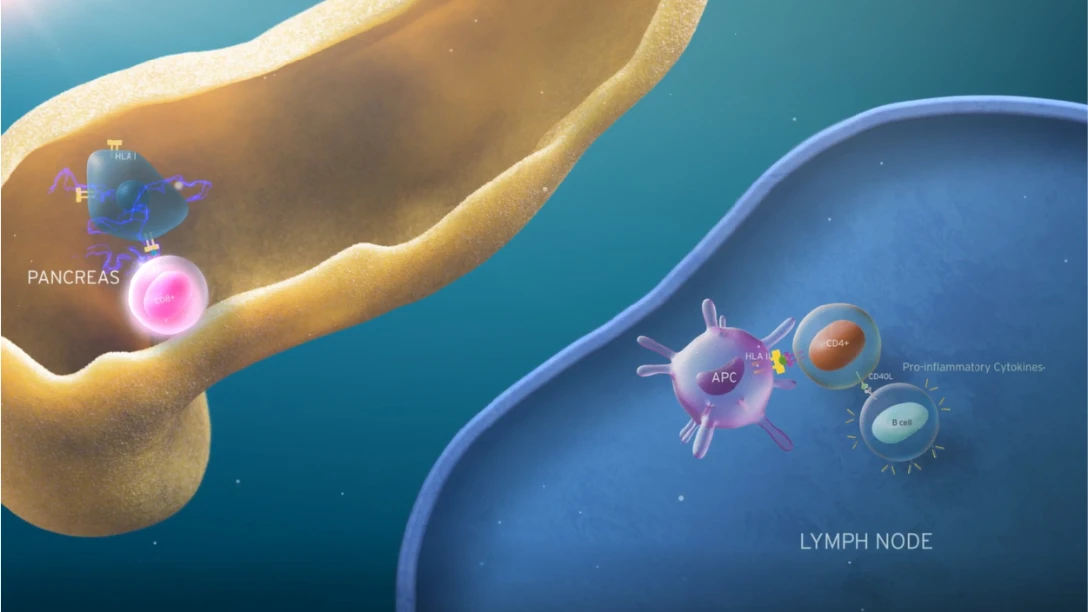
Summary
Learn more about the autoimmune pathophysiology of type 1 diabetes. An environmental trigger causes beta cells to produce antigens and overexpress HLA class I molecules, making them targets for the immune system. Antigen-presenting cells activate autoreactive T cells, initiating a cascade where autoreactive T cells destroy beta cells. Progressive beta cell destruction reduces insulin production, leading to hyperglycemia. Understanding this complex autoimmunity reveals opportunities to intervene to preserve beta cell function and delay disease progression.
MAT-GLB-2601774 - 1.0 - 04/2026

Immune dysregulation in T1D: biomarkers and therapeutic targets
Profs. Kay and Bonifacio discuss the role of T-cell dysregulation as a central pathophysiological mechanism in T1D, and its implications for emerging therapies and biomarkers

The Importance of Preserving Residual Beta-Cell Function in T1D
Maintaining residual beta-cell function in T1D improves glycemic control, reduces complications, and impacts care and outcomes in people with T1D.

The Art of Communication in T1D
Partha Kar talks to Mike Natter, an endocrinologist with type 1 diabetes, about how art and social media can be leveraged to engage and educate the wider diabetes community.