
- Resource
- BR1DGE
- Early Detection
- Infographic
Early Detection of Type 1 Diabetes in Pediatric Populations
Learn why early detection of T1D in children matters, how it reduces DKA risk and supports timely intervention.
Learning Objectives
- Recognize the stages of T1D progression and the benefits of early detection in pediatric populations
- Identify pediatric candidates for islet autoantibody (IAb) screening, including both high-risk and general populations
- Outline the process for IAb screening and subsequent management based on results
.2024-08-20-15-52-07.svg)
Summary
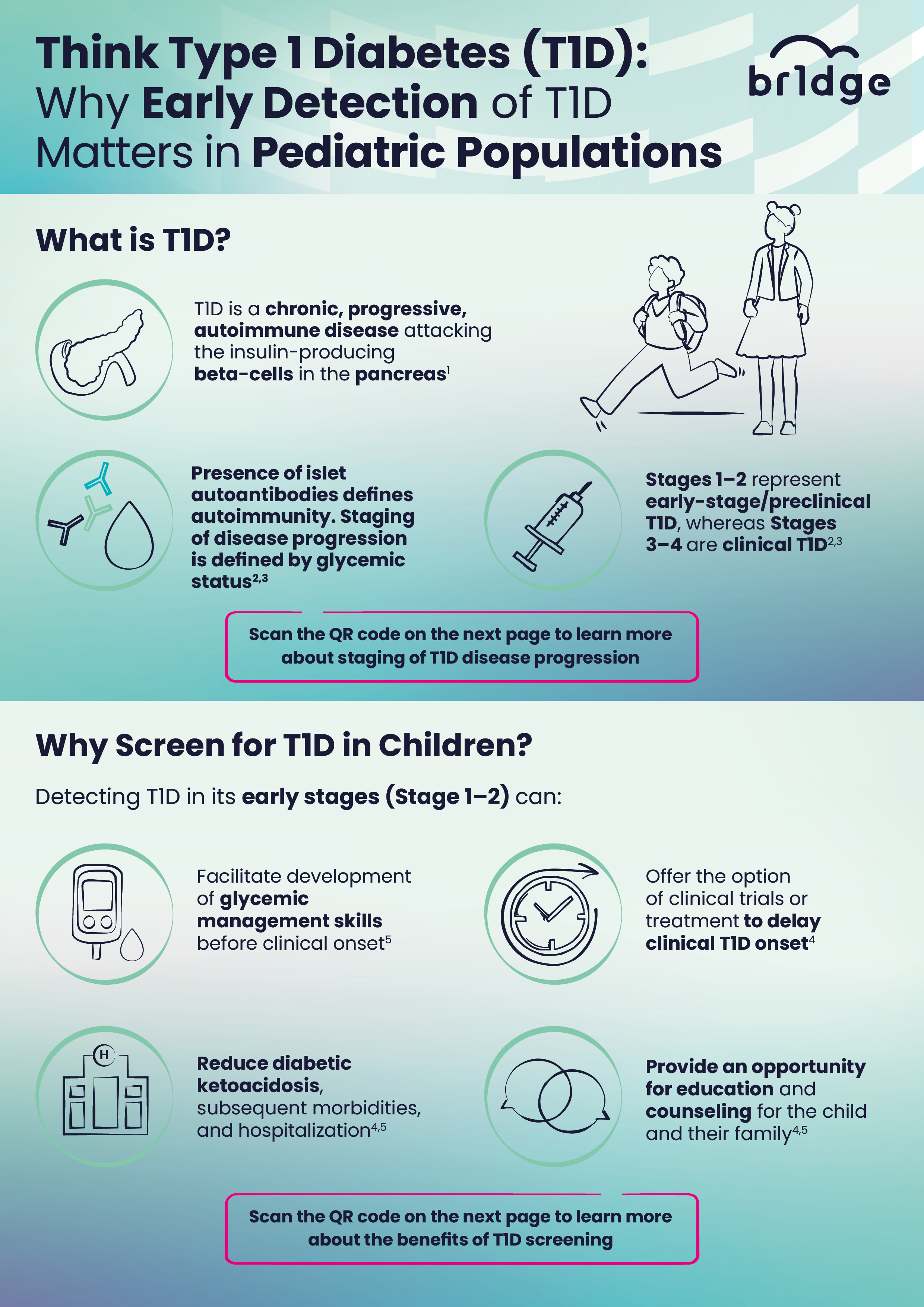
T1D is a chronic, progressive autoimmune disease attacking insulin-producing beta-cells. Its progression is categorized into stages, with early detection of pre-clinical stages (Stages 1-2) in pediatric populations offering significant advantages.
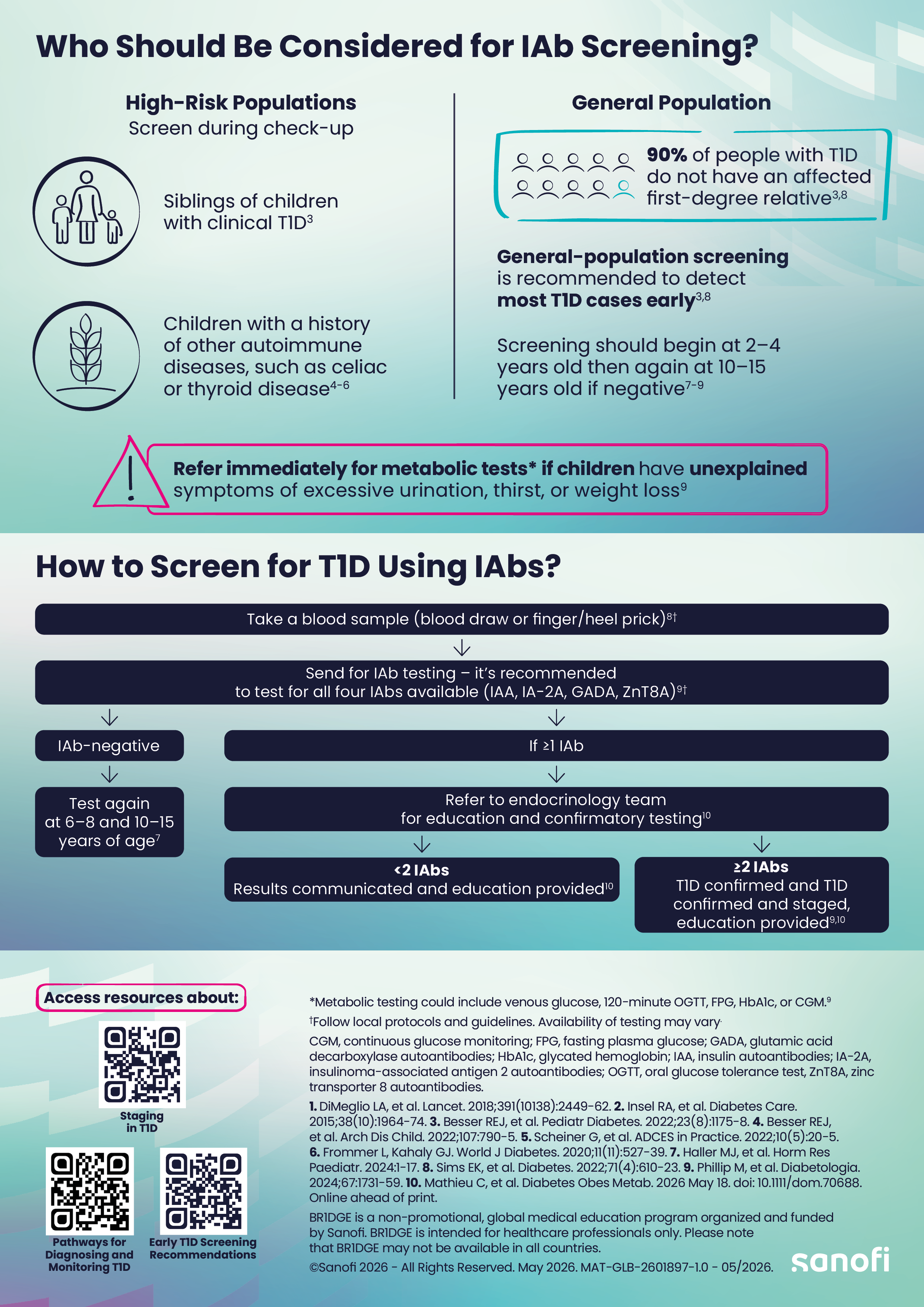
Early detection facilitates the development of glycemic management skills, reduces diabetic ketoacidosis, provides opportunities for clinical trials or treatment to delay onset, and allows for crucial education and counseling for families. Screening recommendations include high-risk populations (siblings of T1D patients, children with other autoimmune diseases) and the general population, starting as early as 2-4 years old. The screening process involves taking a blood sample for islet IAb testing, with clear pathways for follow-up based on the results, including referral to endocrinology teams for confirmed cases.
MAT-GLB-2601897 - 1.0 - 05/2026

Exploring Early Detection of Autoimmune Type 1 Diabetes
Screening for autoimmune T1D involves testing for autoantibodies that are markers of destruction of insulin-producing beta cells.
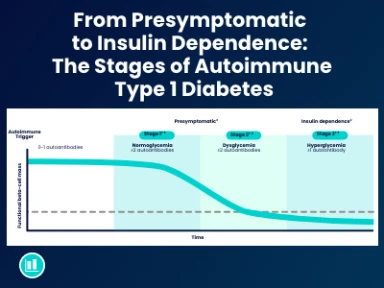
From Presymptomatic to Insulin Dependence: The Stages of Autoimmune Type 1 Diabetes
An overview of the stages of autoimmune type 1 diabetes, from the development of autoimmunity through to insulin dependence.

Exploring the Pathophysiology of Autoimmune Type 1 Diabetes
Type 1 diabetes is underpinned by autoimmune activity against insulin-producing beta cells, as explained in this video.