
- Resource
- BR1DGE
- Early Detection
- Infographic
Early Detection of Type 1 Diabetes in Adults
Learn why early detection of T1D in adults matters, why T1D is often missed in dysglycemic adults, its misclassification as T2D, and how islet autoantibody testing supports accurate diagnosis, staging, and timely management.
Learning Objectives
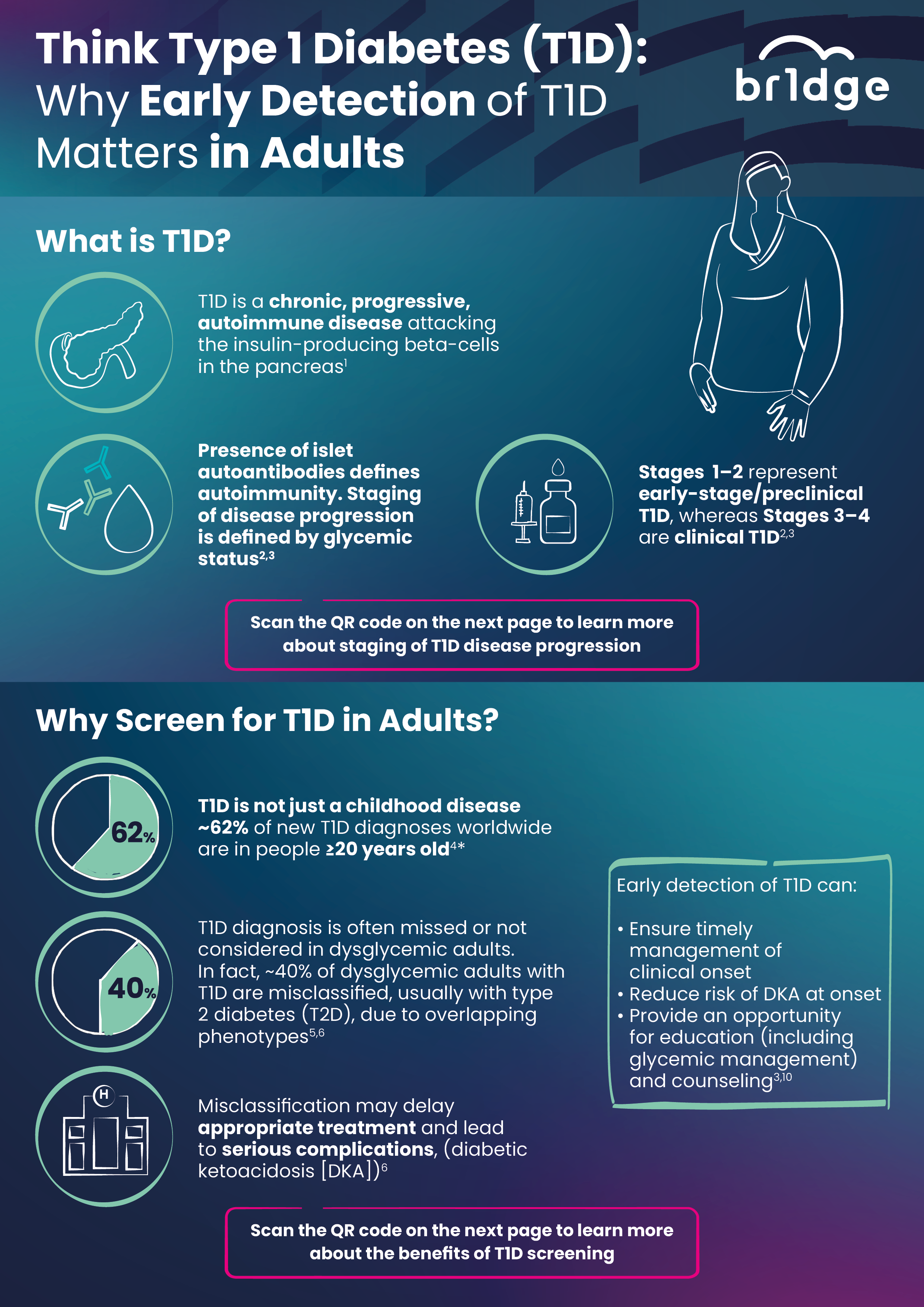
- Recall the majority of T1D diagnoses occur in adults, but noting T1D is frequently missed in dysglycemic adults and misclassified as type 2 diabetes that may lead to clinical consequences including risk of diabetic ketoacidosis (DKA)
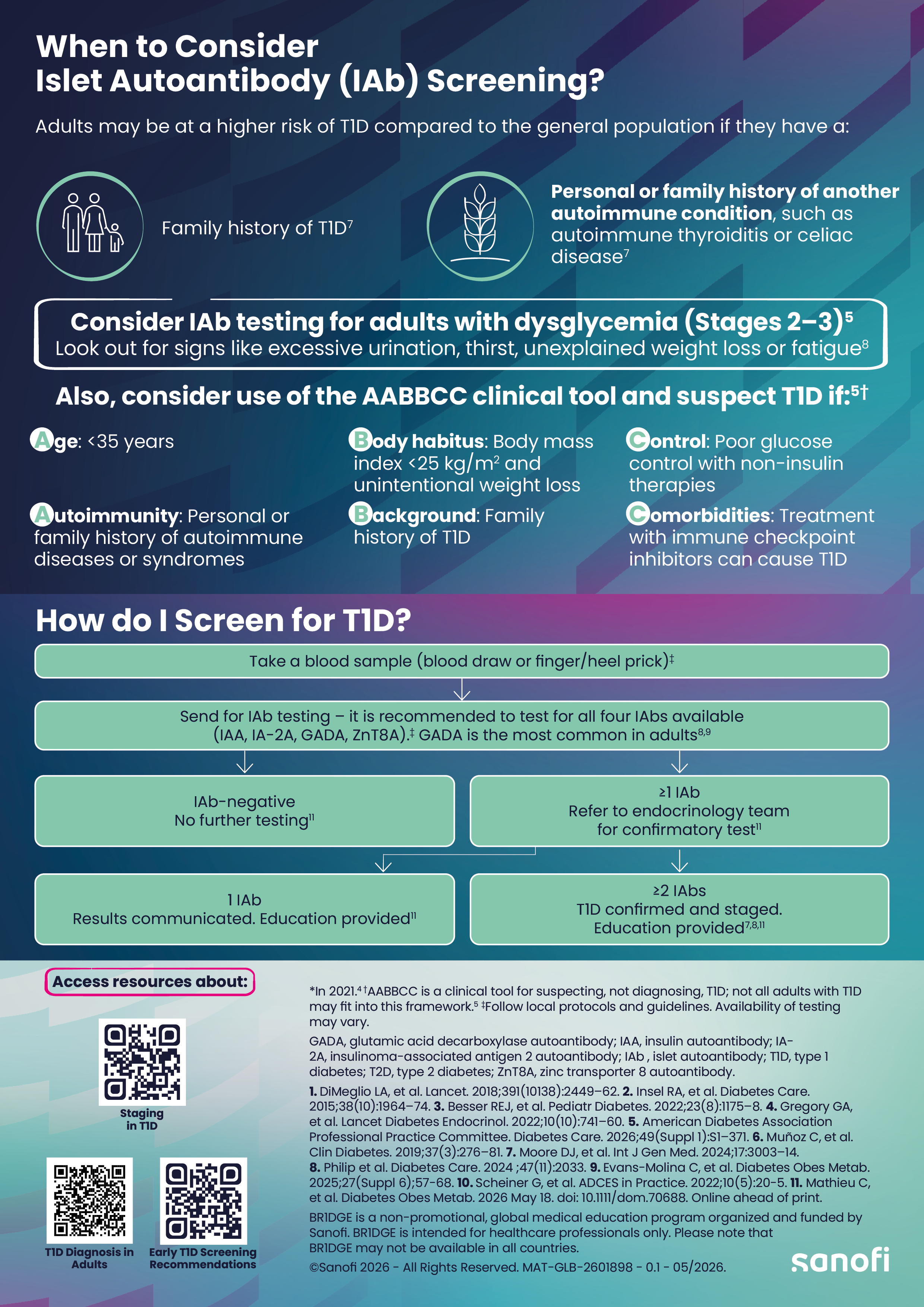
- Establish how to identify adult patients at higher risk for T1D and recall the use of islet autoantibody (IAb) testing to confirm T1D diagnosis
- Understand the process for IAb testing in adults and the subsequent staging and management based on testing results
.2024-08-20-15-52-07.svg)
Summary
T1D is not solely a pediatric condition, ~62% of new diagnoses occur in adults. Many cases of T1D are missed in dysglycemic adults, in fact, ~40% of adults with T1D are misclassified, usually with type 2 diabetes, delaying appropriate treatment and increasing the risk of serious complications like diabetic ketoacidosis (DKA).
Early detection of adult T1D ensures timely management, reduces DKA risk at onset, and provides crucial opportunities for education and counseling. This infographic outlines key indicators for T1D screening in adults, including family history, other autoimmune conditions, dysglycemia, and criteria laid out in the AABBCC clinical tool. It also details the recommended IAb testing process and subsequent referral pathways based on results.
MAT-GLB-2601898 - 1.0 - 05/2026

Exploring Early Detection of Autoimmune Type 1 Diabetes
Screening for autoimmune T1D involves testing for autoantibodies that are markers of destruction of insulin-producing beta cells.
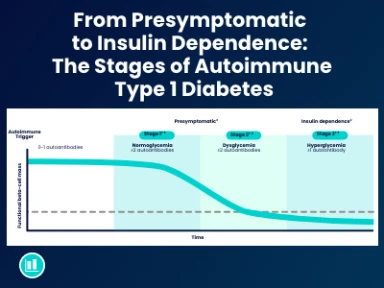
From Presymptomatic to Insulin Dependence: The Stages of Autoimmune Type 1 Diabetes
An overview of the stages of autoimmune type 1 diabetes, from the development of autoimmunity through to insulin dependence.

Exploring the Pathophysiology of Autoimmune Type 1 Diabetes
Type 1 diabetes is underpinned by autoimmune activity against insulin-producing beta cells, as explained in this video.