
- Resource
- BR1DGE
- Staging
- Early Detection
- Article
EASD 2026 Symposium Summary
During the BR1DGE symposium at the European Association for the Study of Diabetes (EASD) 2026 Congress, Prof. Chantal Mathieu facilitated the discussion along with Prof. Jeremy Pettus, and Dr. Marwa Tuffaha on practical strategies for improving early detection care pathways in type 1 diabetes (T1D). The speakers highlighted the challenges and consequences of T1D misclassification, emphasizing the role of islet autoantibody (IAb) screening and system-level strategies to improve diagnosis and staging. They outlined practical approaches for monitoring individuals with early-stage T1D and demonstrated how C-peptide assessment can support evaluation of the beta-cell function and disease progression.
This article is intended to be a summary only. Additional topics were covered in the live symposium in line with the applicable regulations but are not included on the BR1DGE platform.

Meeting Objectives
- Discuss practical approaches to staging, monitoring, and care pathway design for early-stage T1D in adult clinical practice
- Examine the evidence base for correct diagnosis of adults with dysglycemia and the screening of individuals with autoimmune conditions as priority populations for early-stage autoimmune T1D detection
- Explore the emerging real-world evidence on innovations in T1D
- Appraise the clinical utility of C-peptide as a prospective biomarker of β-cell preservation as well as its implications for the management of autoimmune T1D
Symposium Faculty



A Hidden T1D Population: Accurate Diagnosis of Adults with Dysglycemia

“Type 1 and type 2 diabetes are often confused, especially in adults, that when somebody comes in with high blood sugars, think about type 1 diabetes. Screening for autoantibodies can help make the correct diagnosis. Misclassifications can lead to problems. So, we need better systems to help us identify type 1 versus type 2.”
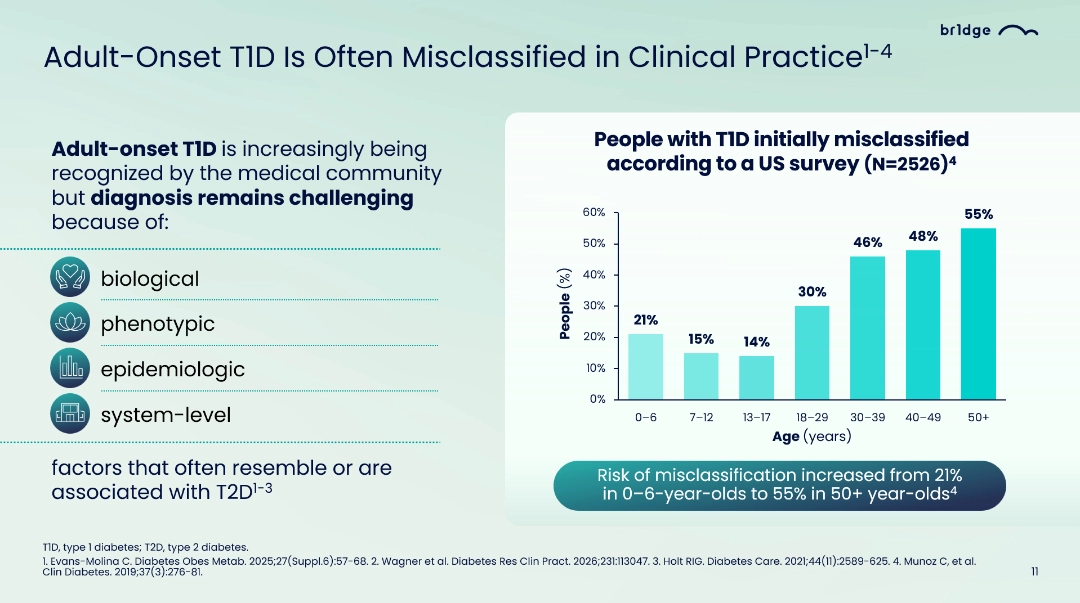
- T1D is not solely a childhood disease; most new diagnoses are seen in adults (mean age 28 years), with approximately 62% of incident cases reported in individuals aged ≥20 years1,2
- The RECLASS study, which analyzed over 6.5 million individuals initially diagnosed with T2D or prediabetes, reported that nearly 4% of individuals (130,000 patients) initially diagnosed with T2D were subsequently reclassified as having T1D. Furthermore, among individuals who were diagnosed as T1D, approximately half had been misclassified at initial clinical presentation.6 Misclassification was higher in children <18 years (7%), followed by 18–35-year adults (4.4%)7
- Individuals with T1D who are misclassified as having T2D often do not receive timely access to insulin therapy and may initially be treated with medications such as metformin or sulfonylureas, resulting in failure of glycemic control and elevated HbA1c levels. The delay in appropriate treatment can lead to consequences such as lack of insulin access, prolonged hyperglycemia, psychological and quality-of-life burden in patients6,8
- Misclassified T1D individuals had approximately twice the healthcare utilization, including higher rates of hospitalizations, outpatient visits, and emergency department visits with DKA, than those correctly diagnosed at presentation9
- AABBCC clinical criteria (age, autoimmunity, BMI, background, control, comorbidities) may not be a reliable distinguisher of T1D from T2D; BMI, in particular, fails since T1D patients can also be overweight/obese10
- Adults with autoimmune comorbidities, including thyroid disease and coeliac disease, have a higher risk of developing T1D than the general population. 11,12 Improved systematic approaches are needed to achieve correct T1D diagnosis, starting with targeting increased risk populations. Simplifying T1D autoantibody order sets can increase screening rates and reduce missed diagnoses
- At UCSD, a dashboard was developed to track individuals with positive IAb results, enabling clinicians to identify patients who may require diagnostic reassessment, ensuring appropriate management, and facilitating clinical trial enrolment. The dashboard can filter recent antibody-positive cases and provide antibody-specific results
From Detection to Care: Considerations for Real-World Early Detection Pathway Design in Adult Practice

“It's also worthwhile to screen normal glycemic individuals once for autoantibodies, especially in individuals with other autoimmune diseases, with autoimmune disease in the family, with people with type 1 diabetes in the family or where you know that there is an increased genetic risk.”
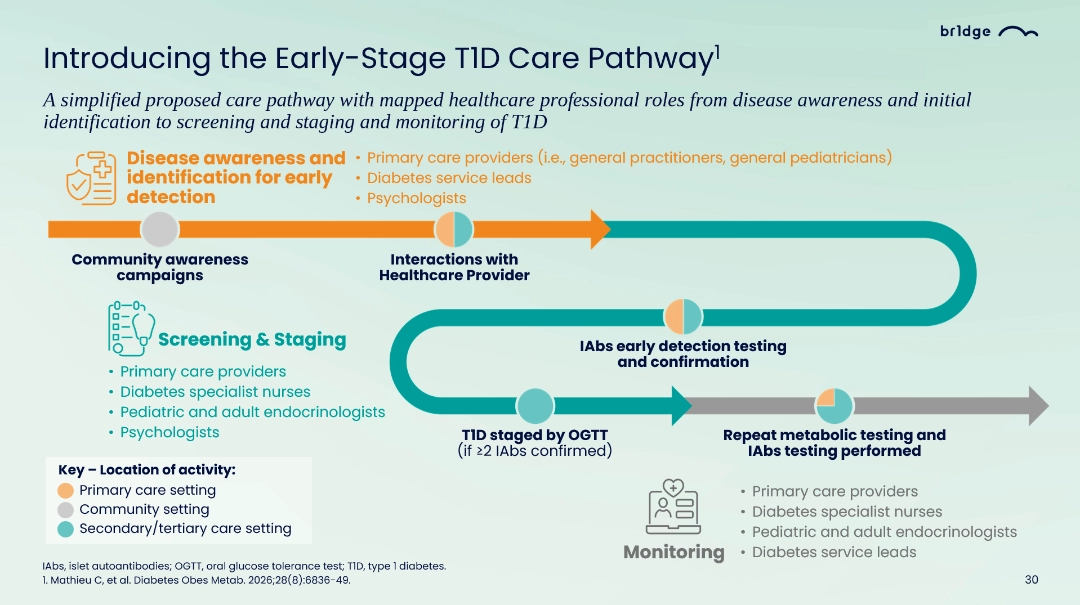
- The recently published “Early-Stage T1D Care Pathway” proposes a simplified care pathway with mapped healthcare professional roles from initial raising disease awareness, identification to screening, staging and monitoring of T1D. Individuals with positive IAb results should undergo confirmatory testing using a second sample, preferably with a different assay1
- Confirmation of two or more IAbs establishes early-stage T1D, should be followed by disease staging based on glycemic status, including assessment with OGTT, HbA1c, and fasting glucose. Distinguishing between Stage 1 and Stage 2 T1D can guide the intensity and frequency of monitoring, as well as the use of tools such as continuous glucose monitoring (CGM)1
- Screening for IAbs should be considered in normoglycemic individuals at increased risk, particularly those with a family history of T1D or known genetic susceptibility. In individuals with dysglycemia or an atypical diabetes phenotype, autoantibody testing can aid in the early detection of T1D. While testing for all four autoantibodies is preferred when available, GAD antibody testing alone may be sufficient in many adults, as approximately 90% of adults with T1D are GAD-positive1
- Primary care providers or specialists can contribute to early T1D detection by identifying individuals with dysglycemia, a personal or family history of autoimmune disease, or other risk factors for T1D. Electronic health records and prior laboratory results can also be used to identify people for screening.2-5 Clear communication of autoantibody screening results is essential, as the term “positive” may be misunderstood by patients. Individuals with ≥2 confirmed IAb should be considered to have early-stage T1D and undergo education and staging1
- For individuals with a single IAb, the clinical significance is less certain. Some may lose IAb positivity over time, whereas others may progress to multiple IAbs and eventually develop Stage 3 T1D. Therefore, it is recommended to reconfirm IAb positivity every three years6-8
- Individuals with ≥2 IAbs and normoglycemia, classified as stage 1 T1D, should be monitored every 12 months. Those with ≥2 autoantibodies and dysglycemia, elevated HbA1c, or impaired fasting glucose are classified as having Stage 2 T1D, a high-risk state that should be monitored every 6 months6,8
- If an individual progresses to Stage 3 T1D, re-evaluation and a care plan should be suggested. Psychological support should be available for individuals diagnosed with early-stage T1D, particularly when the diagnosis leads to persistent anxiety, depression, or maladaptive behaviors1,9
Beta-Cell Preservation in Practice: Real-World Insights and the Role of C-Peptide

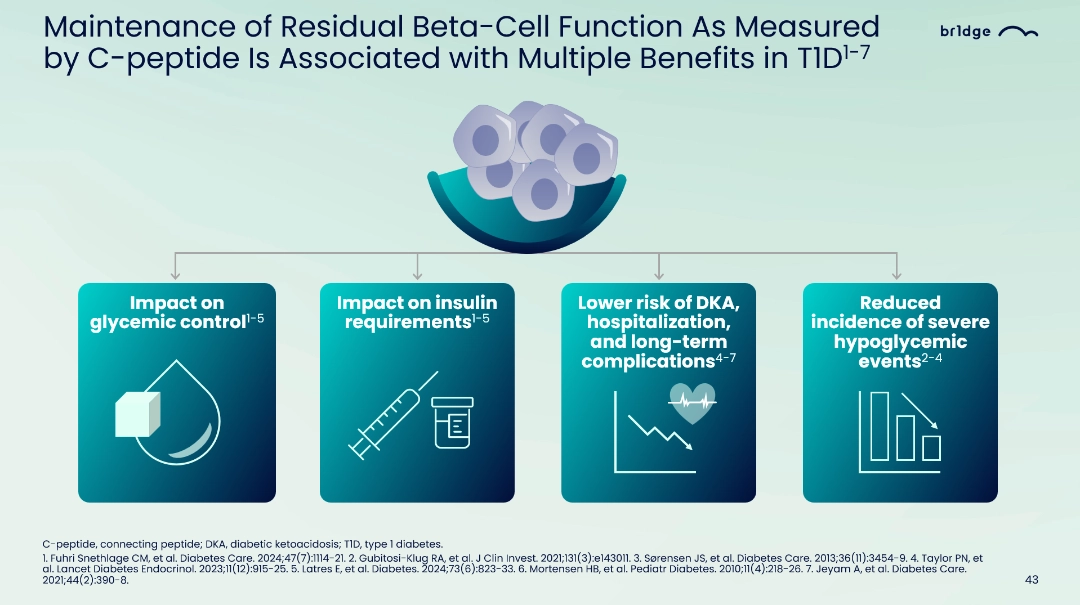
“Maintenance of residual beta-cell as measured by C-Peptide has been associated with better glycemic outcome, better HbA1C, low insulin requirements, low risk of DKA and long-term complications, and reduce instances of severe hypoglycemic events.”
- C-peptide is a measure of residual beta-cell function, with levels declining progressively during T1D progression and falling substantially before the onset of clinical T1D (Stage 3)1
- Preservation of beta-cell function, measured by C-peptide, is clinically important in people with T1D. Evidence from clinical trials has shown that maintaining residual beta-cell function is associated with better glycemic control (lower HbA1c), reduced insulin requirements, a lower risk of DKA, fewer severe hypoglycemic events, and a reduced risk of long-term microvascular complications2-9
- C-peptide is a validated marker of beta-cell function and can support both the diagnosis and monitoring of T1D. Although C-peptide levels may be low at diagnosis and can vary substantially, particularly in adults, measuring C-peptide alongside glucose can aid interpretation. In combination with positive autoantibodies, a low C-peptide level can help distinguish T1D from T2D, especially in individuals with atypical clinical features10,11
MAT-GLB-2606193 – 1.0 – 11/2026
The Hidden T1D Population: Accurate Diagnosis of Adults with Dysglycemia
1. Gregory GA, et al. Lancet Diabetes Endocrinol. 2022;10(10):741-60.
2. Ogle GD, et al. Diabetes Res Clin Pract. 2025 Jul:225:112277.
3. Evans-Molina C. Diabetes Obes Metab. 2025;27(Suppl.6):57-68.
4. Wagner R, et al. Diabetes Res Clin Pract. 2026;231:113047.
5. Holt RIG. Diabetes Care. 2021;44(11):2589-625.
6. Munoz C, et al. Clin Diabetes. 2019;37(3):276-81.
7. Shubrook JH, et al. Presented at ADA Congress; June 2026; New Orleans, Louisiana. Poster 2231-P.
8. Lancet Regional Health. Lancet Reg Health Eur. 2023;29:100661.
9. Pettus JH, et al. Presented at ATTD; March 2026; Barcelona, Spain.
10. American Diabetes Association Professional Practice Committee for Diabetes. Diabetes Care. 2026;49(Suppl 1):S27-S49.
11. Twig G, et al. Diabetes Care. 2025;48:1-8.
12. Edelman SV, et al. Diabetes Obes Metab. 2025;27(8):4229-38.
From Detection to Care: Considerations for Real-World Early Detection Pathway Design in Adult Practice
1. Mathieu C, et al. Diabetes Obes Metab. 2026;28(8):6836-49.
2. Daniel RD, et al. Lancet. 2024;6:E386-95.
3. ADA Roundtable 2024. https://professional.diabetes.org/sites/default/files/2024-04/ADA-T1D Screening-and-Awareness-Roundtable-Report.pdf. Accessed July 2026.
4. ADA Professional Practice Committee. Diabetes Care 2026;49(Suppl. 1):S27-S49.
5. Mittal R, et al. Int J Mol Sci. 2025;26(9):3935.
6. Templeman EL, et al. Diabetes Care. 2025;48(9):1571-80.
7. Sims EK, et al. Diabetes Care. 2026 Sep 2:dc261111. doi: 10.2337/dc26-1111. Online ahead of print.
8. Phillip M, et al. Diabetologia. 2024; 67(9):1731-59 [simultaneously published in Diabetes Care. 2024;47(8):1276-98].
9. NICE Guideline No. 17. https://www.ncbi.nlm.nih.gov/books/NBK553316/. Accessed August 2026.
10. K. Presented at ATTD; March 2024; Florence, Italy.
11. Yan Y, et al. J Med Internet Res. 2025;27:e72167.
Beta-Cell Preservation in Practice: Real-World Insights and the Role of C-Peptide
1. Insel RA, et al. Diabetes Care. 2015;38(10):1964-74.
2. Fuhri Snethlage CM, et al. Diabetes Care. 2024;47(7):1114-21.
3. Gubitosi-Klug RA, et al. J Clin Invest. 2021;131(3):e143011.
4. Sørensen JS, et al. Diabetes Care. 2013;36(11):3454-9.
5. Taylor PN, et al. Lancet Diabetes Endocrinol. 2023;11(12):915-25.
6. Latres E, et al. Diabetes. 2024;73(6):823-33.
7. Mortensen HB, et al. Pediatr Diabetes. 2010;11(4):218-26.
8. Jeyam A, et al. Diabetes Care. 2021;44(2):390-8.
9. Mellor JC, et al. Diabetes Care. 2026:dc251738.
10. Phillip M, et al. Diabetologia. 2024; 67(9):1731-59 [simultaneously published in Diabetes Care. 2024;47(8):1276-98].
11. Schleicher E, et al. J Diabetes Sci Technol. 2025:19322968251362848.